Description
1 Gang Telephone Socket RJ11 V438: Reliable Telephone Connection
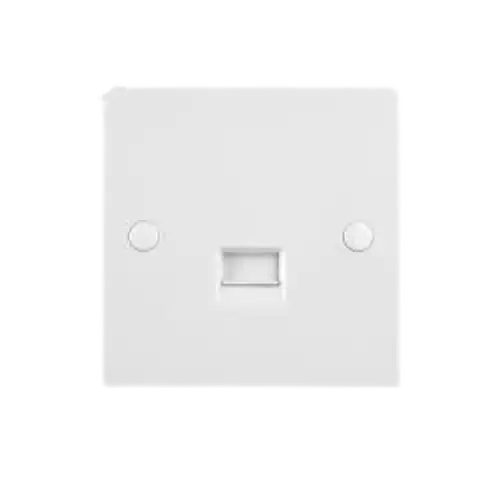
The V438 telephone socket is an essential component for any landline telephone installation. By providing a fixed, wall-mounted termination point for your telephone cabling, it eliminates loose wires and ensures a stable, interference-free connection for your phone, modem, or fax machine. This faceplate features an integrated RJ11 port, accepting the standard 6P4C or 6P2C plugs used by most telecommunications equipment. The standard 1-gang size fits seamlessly into existing back boxes, making it ideal for both new builds and retrofit projects.
1 Gang Telephone Socket RJ11 V438: Key Specifications
| Specification | Details |
|---|---|
| Product Type | Telephone Socket / RJ11 Wall Plate |
| Gang Size | 1 Gang |
| Model | V438 |
| Connector Type | RJ11 (6P4C / 6P2C) |
| Connection Type | Integrated socket (no separate module required) |
| Material | High-quality, durable PVC / ABS Plastic |
| Colour | White (typically brilliant white) |
| Fixing Centres | Standard 60.3mm centres |
| Compatibility | Standard UK 1-gang flush or surface pattress boxes |
| Termination | Screw terminals or IDC (Insulation Displacement Connector) |
| Wiring Standard | Compatible with UK telephone wiring (pins 2 & 5 or 3 & 4) |
| Dimensions | Standard UK 1-gang faceplate (approx. 86mm x 86mm) |
| Features | Colour stable, impact resistant, easy to clean |
| Applications | Home telephones, office phone systems, fax machines, modems |
1 Gang Telephone Socket RJ11 V438: Design and Construction
The V438 faceplate is manufactured from high-quality materials designed for durability and a consistent appearance. It features a smooth, gloss finish that is easy to wipe clean and resists yellowing and discolouration over time, ensuring it matches other accessories in the room for years to come. The integrated RJ11 socket is precisely engineered to accept standard telephone plugs with a secure fit, preventing accidental disconnection. Behind the faceplate, screw terminals or IDC connectors allow for secure termination of your telephone cabling.
1 Gang Telephone Socket RJ11 V438: Telephone Wiring Standards
UK telephone wiring typically uses two of the four or six wires within an RJ11 connector. The most common configurations are:
Pins 2 & 5: Used in many UK telephone installations (standard BT configuration)
Pins 3 & 4: Alternative configuration used in some systems
The V438 socket is designed to accommodate these standard wiring configurations. When terminating, it’s important to maintain consistency with your existing telephone wiring throughout the property. For ADSL and broadband connections, ensure that any microfilters are correctly installed between the socket and your modem/router.
1 Gang Telephone Socket RJ11 V438: Master vs. Slave Sockets
In UK telephone installations, there is an important distinction between master and slave sockets:
Master Socket (NTE5): Usually the first point of entry into the property, containing a removable faceplate and test socket. This is typically provided by the network operator.
Slave/Secondary Sockets: Additional sockets connected in parallel to the master socket. The V438 is typically used as a slave socket for extending telephone points to other rooms.
For secondary extensions, the wiring is simply connected in parallel with the master socket using the same two wires (typically connected to pins 2 and 5 or 3 and 4).
1 Gang Telephone Socket RJ11 V438: Applications
This versatile telephone socket is suitable for numerous applications:
Residential Homes: Providing telephone points in living rooms, bedrooms, studies, and hallways
Office Environments: Creating phone points for desk phones, fax machines, and conference systems
Hotels and Hospitality: Offering guest room telephone connectivity
Retail and Commercial: Supporting POS systems, alarm lines, and dedicated phone lines
ADSL/Broadband: For connecting filters and modems to telephone lines
Healthcare Facilities: Providing communication points in hospitals and clinics
1 Gang Telephone Socket RJ11 V438: Installation
Installation is straightforward for a qualified electrician or competent DIY enthusiast:
Isolate Safety: Always ensure safe working practices. Telephone lines can carry voltage; disconnect if necessary.
Prepare the Cable: Run your telephone cable (typically 2 or 4-core) to the back box location.
Strip Wires: Strip approximately 5-7mm of insulation from each conductor.
Connect Wires: Connect the wires to the appropriate terminals (usually marked):
Line 1 (A & B): Typically connected to the centre two pins (pins 3 & 4 or 2 & 5 depending on standard)
Mount the Faceplate: Offer the faceplate up to the back box, aligning the fixing holes with the threaded lugs.
Fix in Place: Insert the two standard M3.5 x 25mm countersunk screws (typically supplied) and tighten gently until the plate sits flush.
Final Check: Ensure the plate is level and sits neatly against the wall surface.
Test: Connect a telephone and test for dial tone before finalizing.
1 Gang Telephone Socket RJ11 V438: Important Notes
For ADSL/VDSL broadband connections, ensure any microfilters are correctly installed between the socket and your devices.
Secondary sockets are wired in parallel; do not wire them in series.
If extending from a master socket, ensure you connect to the correct terminals (usually the “extension” terminals on the master).
For properties with multiple lines, ensure correct pairing of wires.
If the faceplate shows signs of damage, replace immediately.
Always follow safe isolation procedures when working with telephone wiring.
1 Gang Telephone Socket RJ11 V438: Quality Assurance
The V438 telephone socket is manufactured to meet relevant British and international standards for telecommunications accessories, providing peace of mind regarding both safety and durability. When installed correctly with appropriate cabling and terminations, it provides a permanent, reliable, and professional-looking telephone connection point for years of trouble-free service. The robust construction ensures reliable contact and long-lasting performance in any residential or commercial environment.